Lead nurturing is crucial for converting prospects who aren’t immediately ready to buy. However, the line between helpful engagement and annoying noise is incredibly thin. The primary goal of any long term nurturing strategy is to stay relevant, build trust, and maintain mindshare without bombarding the recipient. To avoid being labeled as spammy, your approach must shift from volume based communication to context driven, value centered interaction that respects the prospect’s stage in their buying journey and their communication preferences.
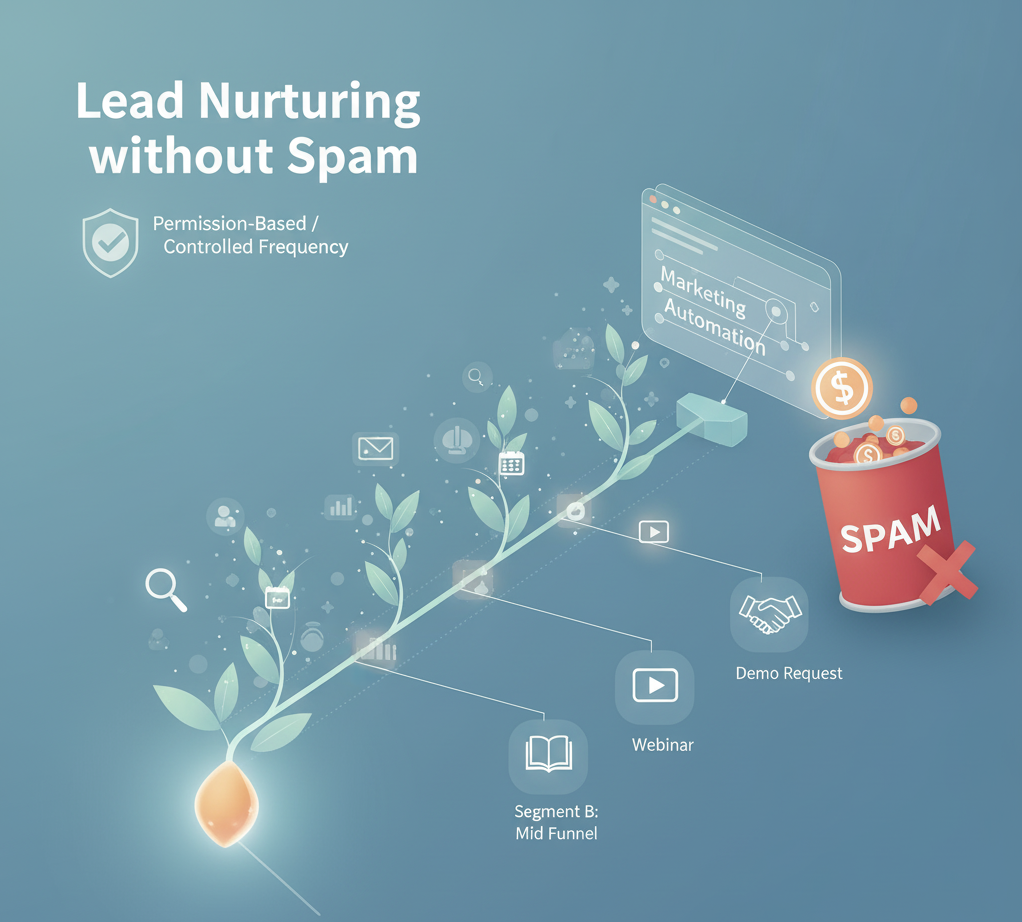
The foundation of non spammy nurturing is strategic segmentation. Sending the same generic emails to everyone on your list is the fastest way to trigger unsubscribes. Instead, leads should be segmented based on three key factors: source (where they came from), demographics (who they are—industry, size), and behavior (what they did—which content they downloaded, which pages they visited). By creating these distinct groups, you ensure that the content delivered is always relevant to their immediate context, whether they are a cold lead needing foundational education or a warm lead exploring pricing.
Once segmented, the focus shifts to delivering contextual value, not just sales pitches. The content in your nurturing campaigns should map directly to the buyer’s journey. Early stage leads (top of the funnel) need educational content like guides, checklists, and explainer videos that help them identify and define their problem. Mid stage leads need comparative information like case studies, webinars, and testimonials to evaluate potential solutions. By focusing on solving their problems and providing insight, you position your brand as a helpful resource, not just a persistent salesperson.
A critical measure to prevent email fatigue is the principle of “less is more” when it comes to frequency. While the exact optimal frequency varies by industry, an effective, non spammy campaign prioritizes quality over quantity. Instead of sending emails daily, map out a schedule that corresponds to expected buyer deliberation time—perhaps a high value email every 7 to 14 days. Furthermore, implement frequency capping within your marketing automation system to prevent a single prospect from receiving more than one or two marketing emails in a given week, regardless of how many segments they belong to.
Beyond email, effective nurturing utilizes a multi channel approach to avoid exhausting a single inbox. If a lead hasn’t engaged with email, try a different, non invasive channel. This could include targeted retargeting ads that show highly specific content, or a direct, personalized message via LinkedIn referencing a recent piece of content they viewed. For high value leads, the marketing automation system should prompt a sales representative to deliver a personalized video message or a brief, human phone call, ensuring the outreach feels like a personal touch, not an automated broadcast.
Ultimately, the best defense against being spammy is implementing two way communication checks. Provide clear, visible options for users to update their preferences rather than forcing them to unsubscribe entirely. This might include allowing them to choose a different communication frequency, or selecting the topics they are interested in. By giving the prospect control over the nature and volume of the conversation, you respect their attention and preferences, transforming a potentially annoying sales sequence into a welcomed, ongoing dialogue that nurtures them toward a buying decision on their timeline.